Main Page: Difference between revisions
Jump to navigation
Jump to search
mNo edit summary |
mNo edit summary |
||
| Line 3: | Line 3: | ||
<h3>On the digital campus</h3> | <h3>On the digital campus</h3> | ||
<div class="indon">I'm Robbie McClintock, a retired professor working to further <i>the digital campus</i>, an important emergent transformation in higher education.</div> | <div class="indon">I'm Robbie McClintock, a retired professor working to further <i>the digital campus</i>, an important emergent transformation in higher education.</div> | ||
<div class="indon">By <i>digital campus</i>, I have in mind an academic form that | <div class="indon">By <i>digital campus</i>, I have in mind an academic form that has many instances on the internet, each currently in a nascent condition. The digital campus is the domain on the internet addressed through the institution's URL, its <i>uniform resource locator</i>. Looked at in the present, all those websites appear rather static, primarily informational and promotional, a variety of efforts to represent in cyberspace what takes place on the material campus to which each connects.</div> | ||
<div class="indon">These nascent digital campuses do not exist in a static present, however. The internet is very young relative to the brick-and-mortar campuses represented on it. Over the course of a quarter century since | <div class="indon">These nascent digital campuses do not exist in a static present, however. The internet is very young relative to the brick-and-mortar campuses represented on it. Over the course of a quarter century since the websites of colleges and universities appeared, their technical capabilities and complexity have significantly expanded. Looked at closely, one can see immense differences in the degree to which current academic websites make effective use of their ongoing infrastructural developments. Let's ask how those differences define both the work to be done and aspirations to be further pursued. </div> | ||
<div class="indon">Is it time to ask whether a kind of academic change of phase is beginning to occur? Are the promotional websites of the dot-edus becoming digital places where faculty, students, staff, alumni, parents, and the general public can do all the activities they want and need to do through alma mater? How would the constraints and affordances of the digital campus differ from those of the material campus? What synergies and dysfunctions might arise? What pedagogical, political, social, economic, and cultural choices would confront those affected by such changes?</div> | <div class="indon">Is it time to ask whether a kind of academic change of phase is beginning to occur? Are the promotional websites of the dot-edus becoming digital places where faculty, students, staff, alumni, parents, and the general public can do all the activities they want and need to do through alma mater? How would the constraints and affordances of the digital campus differ from those of the material campus? What synergies and dysfunctions might arise? What pedagogical, political, social, economic, and cultural choices would confront those affected by such changes?</div> | ||
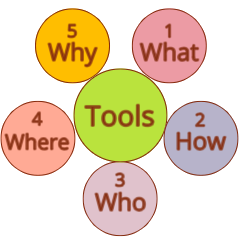
<div class="indon">These are large questions that merit multiple informed responses, and I intend to include my views among them in the form of a book, <i>The Digital Campus: What it does, How it works, Who it serves, Where it flourishes, and Why it is important</i>. I have worked throughout a long career as a student of educational and cultural history and as an innovator with digital technologies seeking to strengthen the agency people have in forming the lives they live. These concerns give me an unusual, highly significant preparation to address the emergence of the digital campus.</div> | <div class="indon">These are large questions that merit multiple informed responses, and I intend to include my views among them in the form of a book, <i>The Digital Campus: What it does, How it works, Who it serves, Where it flourishes, and Why it is important</i>. I have worked throughout a long career as a student of educational and cultural history and as an innovator with digital technologies seeking to strengthen the agency people have in forming the lives they live. These concerns give me an unusual, highly significant preparation to address the emergence of the digital campus.</div> | ||
Revision as of 20:37, 8 February 2025




On the digital campus
I'm Robbie McClintock, a retired professor working to further the digital campus, an important emergent transformation in higher education.
By digital campus, I have in mind an academic form that has many instances on the internet, each currently in a nascent condition. The digital campus is the domain on the internet addressed through the institution's URL, its uniform resource locator. Looked at in the present, all those websites appear rather static, primarily informational and promotional, a variety of efforts to represent in cyberspace what takes place on the material campus to which each connects.
These nascent digital campuses do not exist in a static present, however. The internet is very young relative to the brick-and-mortar campuses represented on it. Over the course of a quarter century since the websites of colleges and universities appeared, their technical capabilities and complexity have significantly expanded. Looked at closely, one can see immense differences in the degree to which current academic websites make effective use of their ongoing infrastructural developments. Let's ask how those differences define both the work to be done and aspirations to be further pursued.
Is it time to ask whether a kind of academic change of phase is beginning to occur? Are the promotional websites of the dot-edus becoming digital places where faculty, students, staff, alumni, parents, and the general public can do all the activities they want and need to do through alma mater? How would the constraints and affordances of the digital campus differ from those of the material campus? What synergies and dysfunctions might arise? What pedagogical, political, social, economic, and cultural choices would confront those affected by such changes?
These are large questions that merit multiple informed responses, and I intend to include my views among them in the form of a book, The Digital Campus: What it does, How it works, Who it serves, Where it flourishes, and Why it is important. I have worked throughout a long career as a student of educational and cultural history and as an innovator with digital technologies seeking to strengthen the agency people have in forming the lives they live. These concerns give me an unusual, highly significant preparation to address the emergence of the digital campus.
Here, I cannot give a full narrative of that preparation, for I'm old, and hence my story's long. Instead, these are high points that indicate the scope of my preparation.
- Born in 1939, I did well in good schools — Buckley (1948-53), Deerfield Academy (1953-57), Princeton (1957-61), Columbia (MA 1963, PhD 1968) — gaining an interest in cultural history in relation to educational theory and practice.
- I had a long professorial career: Johns Hopkins (1965-67), Teachers College, Columbia (assist 1967-71, assoc 1971-81, full 1981-2001, chair 2001-11, and emeritus 2011-on). Two key concerns on which I professed: Educators should pay close attention to the work of major past thinkers (e.g. Socrates, Plato, Aristotle, Cicero, Augustine, Dante, Erasmus, Montaigne, Bacon, Locke, Rousseau, Kant, Hegel, Goethe, Marx, Nietzsche, Freud, Weber); Media and communications as agents of change in education and culture.
- I have been creative and successful in generating externally funded research and development projects to advance the use of digital technologies in academic situations, K-12, and post-secondary, primarily as the founding director of the Institute for Learning Technologies at Teachers College (1982-2002) and as a senior research scholar in the Office of the Vice-Provost of Columbia University (1994-2001), and secondarily with other groups such as the New Laboratory for Teaching and Learning at the Dalton School and at Columbia's Lamont-Doherty Earth Observatory. Those projects shared a common purpose: improving persons' educational experience by interacting in small groups with cultural assets through networked multimedia.
- I have had sustained roles in academic governance, particularly with respect to technology and education, as Chair of the Department of Communication, Computing, and Technology in Education at TC (1982-2002), as head of the Coordinating Committee on the PhD in Education at Columbia (1996-2011), and as one of the organizers and a member of its Board of Directors for the Columbia Center for New Media Teaching and Learning.
- Over the span of my career, I have expressed my ideas and concerns in diverse texts. In them, I have dealt with many topics, drawing on an extensive intellectual background. As a writer, I aspire to be clear and engaging while respecting the complexity and difficulty of the matters I address. I think we live in a culture in which we vastly overproduce cultural materials and consume them with a serious deficiency of attention. I feel a responsibility to resist those conditions by writing for readers who will pay close attention to texts they believe will have importance over an extended period.
Here are citations to representative texts.
- "Machines and Vitalists: Reflections on the Ideology of Cybernetics," The American Scholar (35:2, Spring 1966, pp. 249-58 Link). A heady start, it came out in a special issue on "The Electronic Revolution" along with contributions by Marshall McLuhan, R. Buckminster Fuller, Lynn White, Jr., Jacob Bronowski, Herbert A. Simon, Richard Hoggart, and so on. I made a point about human intelligence that's still relevant to the gush of wonder about AI.
- Man and His Circumstances: Ortega as Educator (New York: Teachers College Press, 1971, xviii, 649 pp. Link) A full intellectual biography of the Spanish thinker, José Ortega y Gasset. The book culminated my studies of Ortega from 1960 to 1971 and it was named the "Outstanding Education Book of 1971" by School and Society."
- "Toward a Place for Study in a World of Instruction," Teachers College Record (73:2, December 1971, pp. 161-205 Link). This historical essay developed my concern that educators pay too little attention to self-motivated study as the energizing impetus for a person's educational development. It is still widely cited in discussions of the importance of the study by educational theorists.
- "Enkyklios Paideia: The Fifteenth Edition of the Encyclopaedia Britannica" Proceedings of the National Academy of Education (1976, pp. 179–216 Link). A critique of pedagogical strategies embodied in the Britannica 15.
- "The Dynamics of Decline: Why Education Can No Longer Be Liberal" Phi Delta Kappan (60:9, May 1979, pp. 636–640 Link). It gave my version of how and why liberal education has weakened.
- "Into the Starting Gate: On Computing and the Curriculum." Teachers College Record (88:2, Winter 1986, pp. 191–215 Link; translation also published in Spain, 1988). I introduced a basic concern about whether and how, where, when, and why interacting with cultural resources in digital form will have different constraints and affordances than interacting with material resources. The Digital Campus will essentially revisit this concern 40 years later.
- The Cumulative Curriculum: Multi-Media and the Making of a New Educational System. Final submission of a proposal requesting $5.4 million plus equipment over 5 years submitted to the IBM Corporation (Spring 1991, 213 pp. Link) IBM vetted this proposal favorably and, owing to its scale, docketed it for action by the IBM Board. Unfortunately, at that meeting, the CEO announced the company's first serious deficit was impending, and the Board stopped external commitments. All was not lost, however. A private donor funded the Dalton Technology Plan ($3.4 million) for 1991-94, and that became the springboard for The Eiffel Project: New York City's Small Schools Partnership Technology Learning Challenge, winning a U.S. Department of Education funding for a 5-year, $7.1 million grant, plus around $11 million in matching effort.
- Smart Cities: New York. Electronic Education for the New Millennium An educational framework prepared for the New York City Board of Education and its Taskforce on Teaching and Learning in Cyberspace (December 2000) Link. This presented the pedagogical rationale for a huge project to build a home and school network and equip all students and teachers, 4th grade through high school, with specially designed laptops for use at home and school. in the NYC public school system. It convinced the Board to issue an RFP for the project, with Accenture working with the Board to manage it. Two sizable coalitions emerged to vie for the project, but they swiftly collapsed due to the dotcom crisis and vanished. Wildly ahead of their time, the project and my rationale for it were an interesting speculation, nevertheless. My involvement in large-scale proposal writing ended there.
Three recent books, each self-published and in print, merit mention:
- Homeless in the House of Intellect: Formative Justice and Education as an Academic Study (New York: Laboratory for Liberal Learning, 2005, 111 pp. [Link) How might the study of education in the arts and sciences differ from the study of it in professional schools?
- Enough: A Pedagogical Speculation (New York: Collaboratory for Liberal Learning, 2012, 284 pp. Link, Portuguese translation, 2020.) A wish fulfillment about how my views might appear to a friendly critic in 2162.
- Formative Justice (New York: The Reflective Commons, 2019, 138 pp. Link) What do people seek in trying to form and educate themselves?